
Trust is the foundation of any successful casino, whether online or on land. For players, trust is not just about believing a casino will pay out winnings; it encompasses the security of personal data, fairness of games, transparency in operations, and reliability of customer support. When a player sits down at a slot machine or logs in to an online platform, the subconscious question in their mind is, “Can I rely on this casino to be fair and secure?” Meeting this expectation requires careful planning, consistent policies, and adherence to industry regulations.
One of the primary ways casinos establish trust is through licensing and regulation. A casino that operates under the oversight of a reputable regulatory body, such as the Malta Gaming Authority or the UK Gambling Commission, demonstrates its commitment to legal and ethical standards. These authorities set strict rules regarding fair gaming, responsible gambling, anti-money laundering practices, and security protocols. By obtaining and displaying a valid license, a casino signals to players that it meets these benchmarks, providing a sense of credibility before a single bet is placed.
Fairness is another critical aspect of trust. Players need to feel confident that each game outcome is genuinely random and not manipulated to favor the house excessively. Independent audits by certified organizations, such as eCOGRA or iTech Labs, serve as third-party validation that a casino’s games meet rigorous fairness standards. These audits examine random number generators, payout percentages, and the overall integrity of gaming systems. When a casino publishes audit reports or certification badges on its website, it reassures players that fairness is not a claim but a verified practice.
Transparency extends beyond fairness to encompass how a casino communicates with its players. Clear terms and conditions, straightforward bonus rules, and accessible information about deposit and withdrawal processes help prevent misunderstandings. Players are naturally cautious when bonuses carry hidden wagering requirements or when withdrawal timelines are unclear. Casinos that provide detailed FAQs, tutorial guides, and visible policies demonstrate openness, which fosters trust. A transparent casino makes players feel informed and empowered, reducing frustration and uncertainty.
Security of data and financial transactions is equally important. In an era where cyberattacks and identity theft are frequent, casinos must employ advanced encryption technologies and secure payment systems to protect users. When players see a secure SSL connection, trusted payment options, and strong verification protocols, it reassures them that their sensitive information is safeguarded. Trust in a casino is fragile, and even a single data breach can significantly damage reputation. Proactive security measures, such as two-factor authentication and regular system monitoring, are therefore vital components of building and maintaining trust.
Customer support is often an overlooked aspect of trust. Reliable and accessible support demonstrates that the casino values its players and is prepared to resolve issues promptly. Whether through live chat, email, or phone, a responsive support team reduces anxiety, especially in situations involving disputed bets or technical difficulties. Players who know they can reach a helpful agent quickly are more likely to feel secure and continue playing. Conversely, delayed or unhelpful support can erode trust, even if other aspects of the casino are solid.
Consistency in performance further strengthens trust. Players notice when games load smoothly, when payouts are processed reliably, and when systems operate without unexpected downtime. A casino that consistently delivers a smooth experience builds confidence over time. This consistency extends to responsible gaming measures, ensuring that tools for self-exclusion, deposit limits, and cooling-off periods are always available and effective. Consistent application of policies, technical reliability, and user experience all contribute to a perception of professionalism and trustworthiness.
Reputation also plays a significant role. Word-of-mouth, player reviews, and industry ratings influence trust just as much as licensing and security. Casinos that engage in responsible marketing, honor promotions, and maintain positive relationships with their community develop a strong reputation that attracts and retains players. Conversely, reports of delayed withdrawals, unfair practices, or poor support can spread quickly and damage trust irreversibly. A strong reputation, built through consistent, ethical practices, becomes a self-reinforcing mechanism for player confidence.
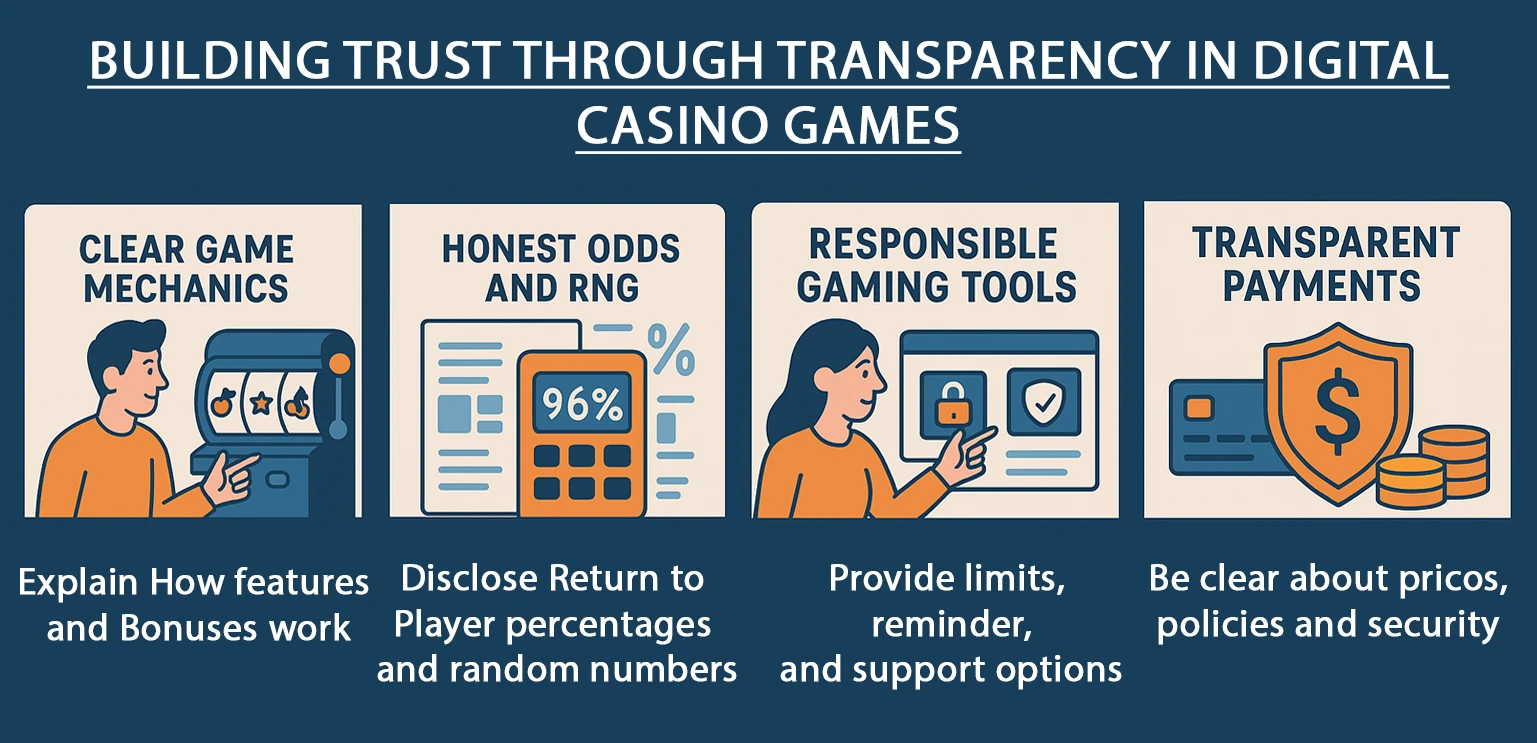
In the digital age, technological transparency is another layer of trust. Modern casinos leverage sophisticated systems, but explaining these systems in simple terms helps players understand what they are engaging with. Explaining random number generation, payout calculations, and game mechanics in a user-friendly way removes the mystery and suspicion often associated with gambling. Players are more likely to trust a casino that educates them about how games work, showing that there is nothing to hide and that outcomes are genuine.
Finally, ethical practices and social responsibility contribute to trust. Casinos that demonstrate concern for player well-being, support problem gambling initiatives, and engage responsibly with their communities send a message of integrity. Trust is not solely transactional; it is relational. When players sense that a casino genuinely cares about ethical standards and community impact, it deepens the bond of trust and encourages loyalty.
Ultimately, trust in a casino is the combination of regulatory compliance, fairness, transparency, security, responsive support, consistent performance, reputation, technological clarity, and ethical responsibility. Each of these components reinforces the others, creating a network of credibility that players can rely on. A trusted casino does not merely operate; it communicates reliability through actions, policies, and ongoing commitment to its players’ interests. In a world where players have countless options, trust becomes the defining factor that distinguishes reputable casinos from those that are merely available. When trust is established and maintained, players feel secure, respected, and confident, which leads to lasting relationships and a thriving gaming environment.
Trust is not a single feature or policy—it is a continuous practice. Every interaction, every transaction, and every game contributes to a perception that can either strengthen or weaken player confidence. By prioritizing trust, casinos not only comply with regulations and ethical standards but also create a loyal, satisfied player base. In essence, trust transforms a casino from a place of uncertainty into a space where players feel comfortable taking risks, knowing that fairness, security, and transparency guide their experience.







Leave a Reply